
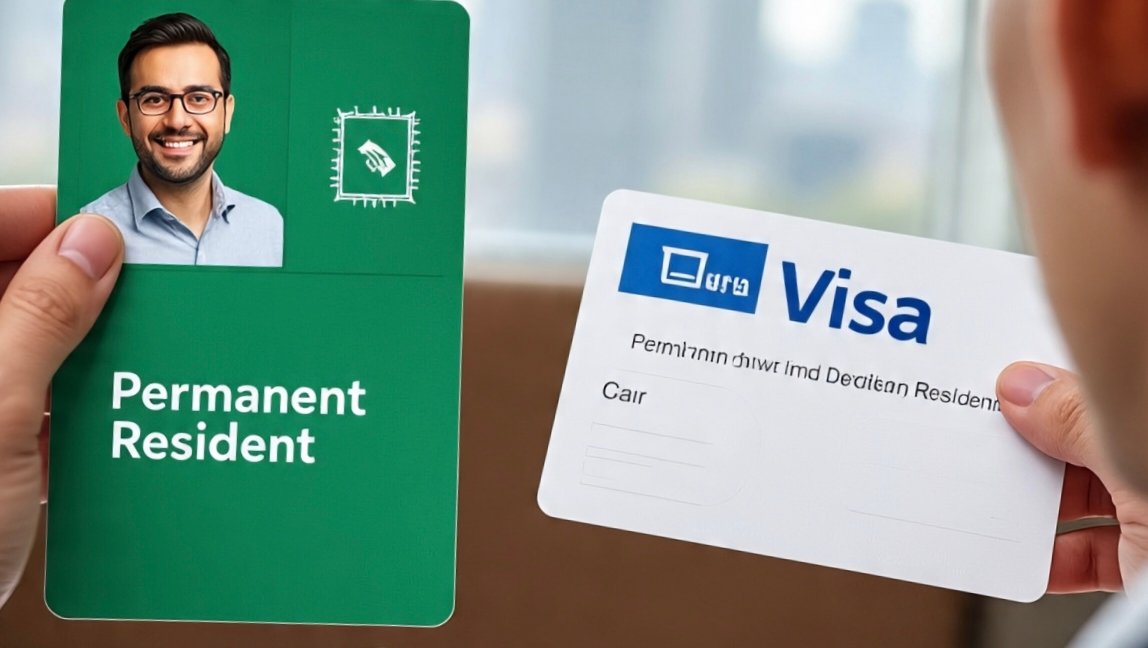
When people plan to move to the United States, they often confuse two important immigration terms: green card vs visa. Many believe they mean the same thing, but they serve very different purposes. Understanding the difference between a green card and a visa can help you choose the right immigration path and avoid costly mistakes.
In this comprehensive guide, you will learn:
- What a visa is
- What a green card is
- Key differences between green card and visa
- Types of U.S. visas
- Benefits of permanent residency
- How to transition from a visa to a green card
- Which option is right for you
Let’s break everything down clearly and simply.
What Is a Visa?
A visa is an official document that allows a foreign national to enter the United States for a specific purpose and limited period.
The U.S. government places visas in your passport. A visa does not guarantee entry, but it allows you to travel to a U.S. port of entry and request admission.
The main authority overseeing visas is the U.S. Department of State, while immigration enforcement falls under the U.S. Citizenship and Immigration Services.
Types of U.S. Visas
U.S. visas fall into two broad categories:
1. Nonimmigrant Visas (Temporary Stay)
These visas allow you to stay in the U.S. temporarily for a specific reason.
Common examples include:
- B-1/B-2 Visa – Business or tourism
- F-1 Visa – International students
- H-1B Visa – Skilled workers
- L-1 Visa – Intra-company transfer
- J-1 Visa – Exchange visitors
Each visa type has strict rules regarding employment, study, and length of stay.
2. Immigrant Visas (Permanent Intent)
An immigrant visa allows you to enter the United States with the intention of becoming a permanent resident. After entering, you receive your green card.
What Is a Green Card?
A green card grants lawful permanent resident (LPR) status in the United States. It allows you to live and work permanently in the country.
The official name for a green card is “Permanent Resident Card.”
Once you hold a green card, you no longer need a visa to live or work in the U.S.
Who Issues Green Cards?
The U.S. Citizenship and Immigration Services processes green card applications inside the U.S., while immigrant visas are processed through U.S. embassies abroad under the U.S. Department of State.
Green Card vs Visa: Core Differences
Let’s clearly compare both:
| Feature | Visa | Green Card |
| Purpose | Temporary or entry permission | Permanent residency |
| Duration | Limited | Permanent |
| Work Rights | Depends on visa type | Full work authorization |
| Renewal | Often required | Renew every 10 years (card only) |
| Path to Citizenship | No | Yes |
| Travel Flexibility | Restricted | More flexible |
The biggest difference: A visa allows temporary stay. A green card allows permanent residence.
Entry Permission vs Immigration Status
Many people misunderstand this key point:
- A visa allows you to enter the U.S.
- A green card gives you legal immigration status.
You can have a visa without permanent residency. But once you have a green card, you are officially a lawful permanent resident.
Benefits of a Visa
A visa offers flexibility if you:
- Want to study temporarily
- Want to work on a contract
- Plan to visit family
- Do not intend to immigrate permanently
It suits people testing opportunities in the U.S.
Benefits of a Green Card
A green card provides significant advantages:
1. Permanent Living Rights
You can live anywhere in the United States.
2. Work Freedom
You can work for almost any employer without sponsorship.
3. Path to U.S. Citizenship
After typically five years, you may apply for naturalization.
4. Sponsor Family Members
You can petition certain relatives.
5. Social Security Benefits
You gain access to benefits after qualifying.
How to Get a Visa
The visa process generally involves:
- Filing a petition (if required)
- Completing an online application
- Paying visa fees
- Attending a consular interview
- Receiving approval or denial
Processing times vary depending on visa category and country.
How to Get a Green Card
You can obtain a green card through:
1. Family-Based Immigration
U.S. citizens and permanent residents can sponsor relatives.
2. Employment-Based Immigration
Employers sponsor foreign workers.
3. Diversity Visa Lottery
The Diversity Immigrant Visa Program provides green cards to individuals from countries with low immigration rates.
4. Refugee or Asylum Status
5. Investment (EB-5 Program)
Can You Convert a Visa to a Green Card?
Yes. Many people enter the U.S. on temporary visas and later adjust status.
Common transitions include:
- F-1 student to H-1B worker to green card
- H-1B worker to employment-based green card
- Marriage-based green card from tourist or student visa
Adjustment of status occurs through USCIS.
Processing Time Comparison
Visa Processing:
- Tourist visas: weeks to months
- Work visas: months
Green Card Processing:
- Family-based: 1–10+ years
- Employment-based: 1–5+ years
Waiting times depend on annual caps and country of origin.
Travel Differences
Visa holders must follow strict re-entry rules.
Green card holders can travel freely but must avoid staying outside the U.S. for long periods (usually more than 6–12 months).
Green Card vs Visa: Cost Comparison
Visa Costs:
- Application fees
- Petition fees
- Legal fees
Usually range from $160 to several thousand dollars.
Green Card Costs:
- Filing fees
- Medical exam
- Biometrics
- Attorney fees
Can range from $1,000 to $10,000+ depending on category.
Which Option Is Right for You?
Choose a Visa if:
- You want short-term stay
- You are unsure about permanent immigration
- You plan to study or visit
Choose a Green Card if:
- You want long-term stability
- You want full work freedom
- You aim to become a U.S. citizen
Common Myths About Green Cards and Visas
Myth 1: A visa guarantees entry.
False. Customs officers decide entry.
Myth 2: A green card makes you a citizen.
False. It grants permanent residency, not citizenship.
Myth 3: All visas allow work.
False. Only certain categories allow employment.
Risks of Overstaying a Visa
Overstaying can result in:
- Deportation
- Future visa bans
- Difficulty obtaining green card
Always maintain lawful status.
Permanent Residency Responsibilities
Green card holders must:
- File U.S. taxes
- Obey laws
- Carry proof of status
- Renew card every 10 years
Failure to maintain residence can result in losing status.
Citizenship After Green Card
After holding permanent residency for typically five years (three years if married to a U.S. citizen), you may apply for naturalization.
Citizenship offers:
- Voting rights
- U.S. passport
- No risk of losing residency
Final Thoughts: Green Card vs Visa
Understanding the difference between a green card and a visa can shape your entire immigration journey.
A visa offers temporary opportunity and flexibility.
A green card offers permanence, stability, and a pathway to citizenship.
Before making a decision, consider your long-term goals, financial situation, and career plans. Consult an immigration attorney if your case is complex.
Making the right choice today can define your future in the United States.